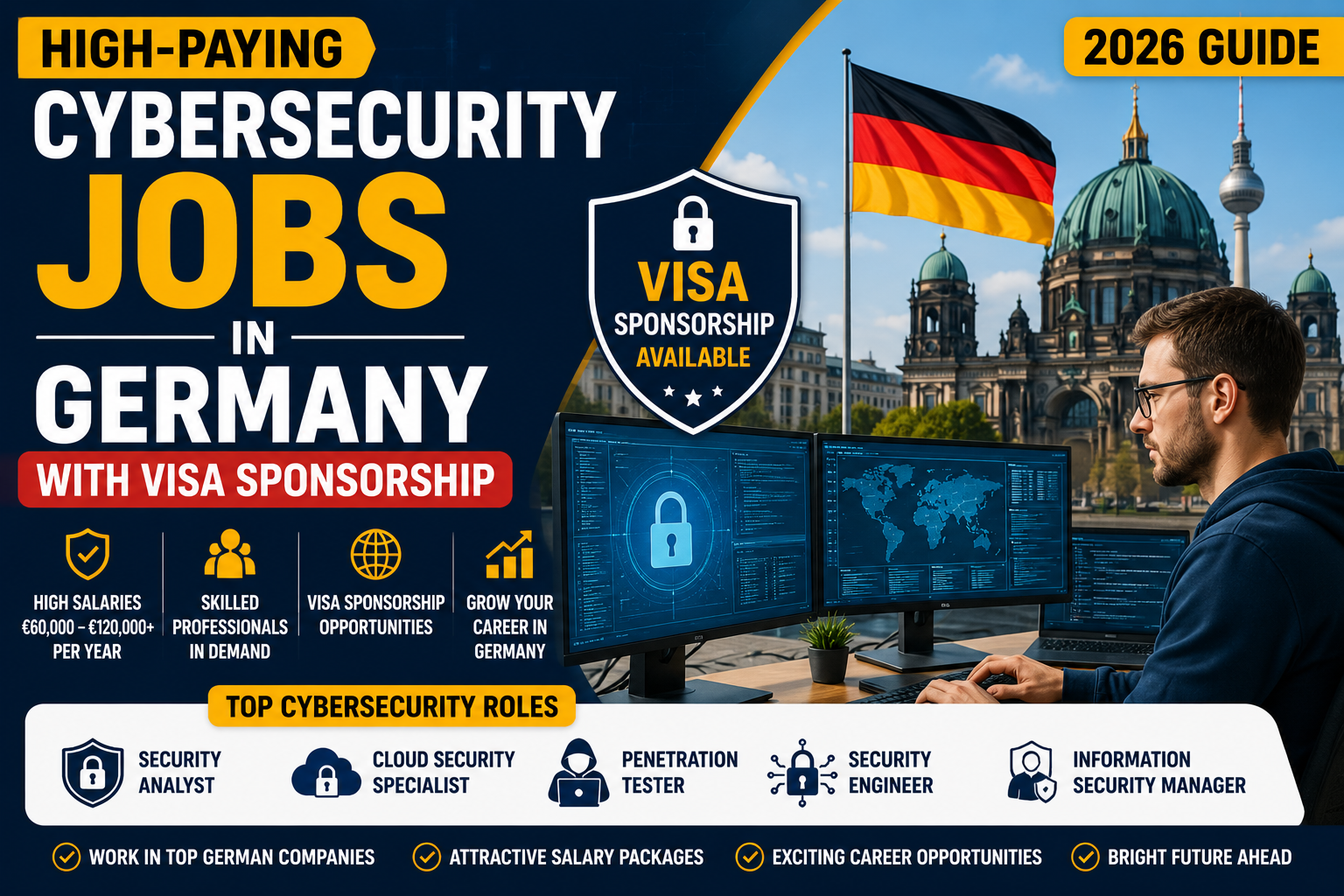
High-Paying Cybersecurity Jobs in Germany with Visa Sponsorship (2026)
Germany is one of Europe’s strongest technology and business markets, and cybersecurity has become a major priority for companies across the country. As more businesses move toward cloud systems, online banking, digital records, e-commerce, and remote work, the need for skilled cybersecurity professionals continues to grow.
In 2026, cybersecurity jobs in Germany can be a strong career option for qualified international applicants. Some German employers may support foreign workers with visa-related documents when they need skilled professionals and cannot easily fill positions locally. However, applicants should understand that visa sponsorship is not guaranteed. It depends on the employer, job offer, qualifications, salary level, and official immigration rules.
Why Cybersecurity Jobs Are in Demand in Germany
Cybersecurity is important because companies must protect customer data, business systems, financial information, and internal networks. Germany has many industries that require strong digital security, including banking, insurance, automotive, healthcare, manufacturing, logistics, and government-related services.
Cyber threats are becoming more advanced, so companies need specialists who can prevent attacks, detect risks, respond to incidents, and improve security systems. This demand has created opportunities for professionals with practical experience in IT security, cloud security, network protection, and risk management.
1. Cybersecurity Analyst
A cybersecurity analyst monitors systems, checks security alerts, investigates suspicious activity, and helps protect company data. This is one of the most common cybersecurity roles in Germany.
Typical responsibilities include:
- Monitoring security tools
- Investigating alerts
- Reporting incidents
- Checking system vulnerabilities
- Supporting security audits
- Helping improve company security policies
Good knowledge of networks, operating systems, firewalls, and security monitoring tools can help candidates qualify for this role.
2. Security Engineer
Security engineers design and improve security systems for companies. They work on firewalls, identity access systems, encryption, cloud security, and network protection.
This role usually requires more technical experience than an entry-level analyst role. Employers may prefer candidates who understand secure system design, threat prevention, and infrastructure protection.
Useful skills include:
- Network security
- Linux and Windows security
- Cloud platforms
- SIEM tools
- Firewalls
- Vulnerability management
- Security automation
3. Cloud Security Specialist
Cloud security specialists are in demand because many German companies use cloud platforms such as AWS, Microsoft Azure, and Google Cloud. These professionals help secure cloud infrastructure, data storage, applications, and user access.
Common duties include:
- Managing cloud security controls
- Monitoring cloud threats
- Securing user permissions
- Reviewing cloud configurations
- Supporting compliance requirements
Applicants with cloud certifications and real project experience may have better chances in this field.
4. Penetration Tester
Penetration testers, also called ethical hackers, test systems to find security weaknesses before criminals can exploit them. They may test websites, networks, mobile apps, and internal systems.
This role requires strong practical skills and professional responsibility. Penetration testers must follow legal and company-approved testing methods.
Useful skills include:
- Web application security
- Network testing
- Vulnerability scanning
- Reporting security weaknesses
- Secure coding basics
- Ethical hacking tools
5. Information Security Manager
Information security managers lead security strategy and help companies follow security standards. This role is usually suitable for experienced professionals.
Responsibilities may include:
- Creating security policies
- Managing security teams
- Handling risk assessments
- Preparing security reports
- Coordinating audits
- Improving company-wide protection
Strong communication skills are important because this role often involves working with management, technical teams, and legal departments.